Lacquered Kitchens
White, black, matt or gloss — lacquer gives clean, even colour and depth. We choose it together with you, from seven Italian houses.
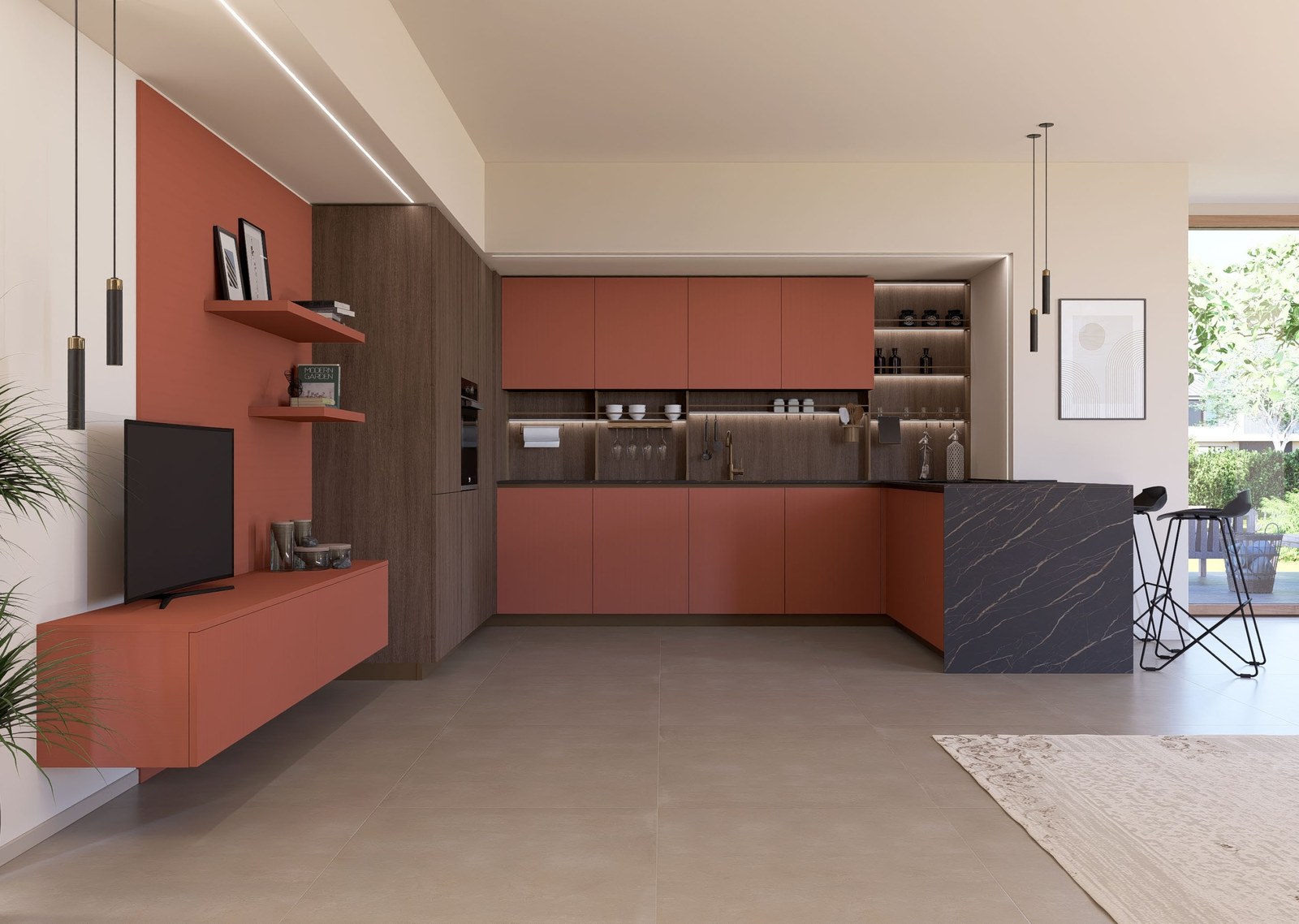
In short
Lacquer is a painted surface: layers of colour and varnish over MDF or over solid wood. It gives even colour, with no grain or knots — exactly the shade you chose.
It comes in four versions: matt, gloss, metallic and brushed. Matt hides fingerprints better; gloss adds depth and light.
Seven of the houses we curate work in lacquer for the kitchen — each with its own palette, from 55 to 102 shades.
In some programmes the shade can be made to order in RAL — if the colour you want is not in the sample book, we will talk it through.
When someone tells us «I want a white lacquered kitchen», they almost never mean one particular white. They mean a feeling: clean surfaces, colour without noise, a kitchen that does not demand attention. Lacquer does that better than any other finish — which is why it is the most requested finish in our showroom. Below you will find exactly what it is, how its versions differ, and which shades work in practice.
Matt or gloss?
It is the first question we hear, and the answer is not only about taste — it changes how the kitchen is maintained and how the room reads.

Matt lacquer
The quietest choice. It absorbs light, does not reflect, and hides fingerprints far better. Modern matt lacquers are soft-touch. It is also the most widespread: the great majority of the shades we hold are matt.
317 shades · 7 houses
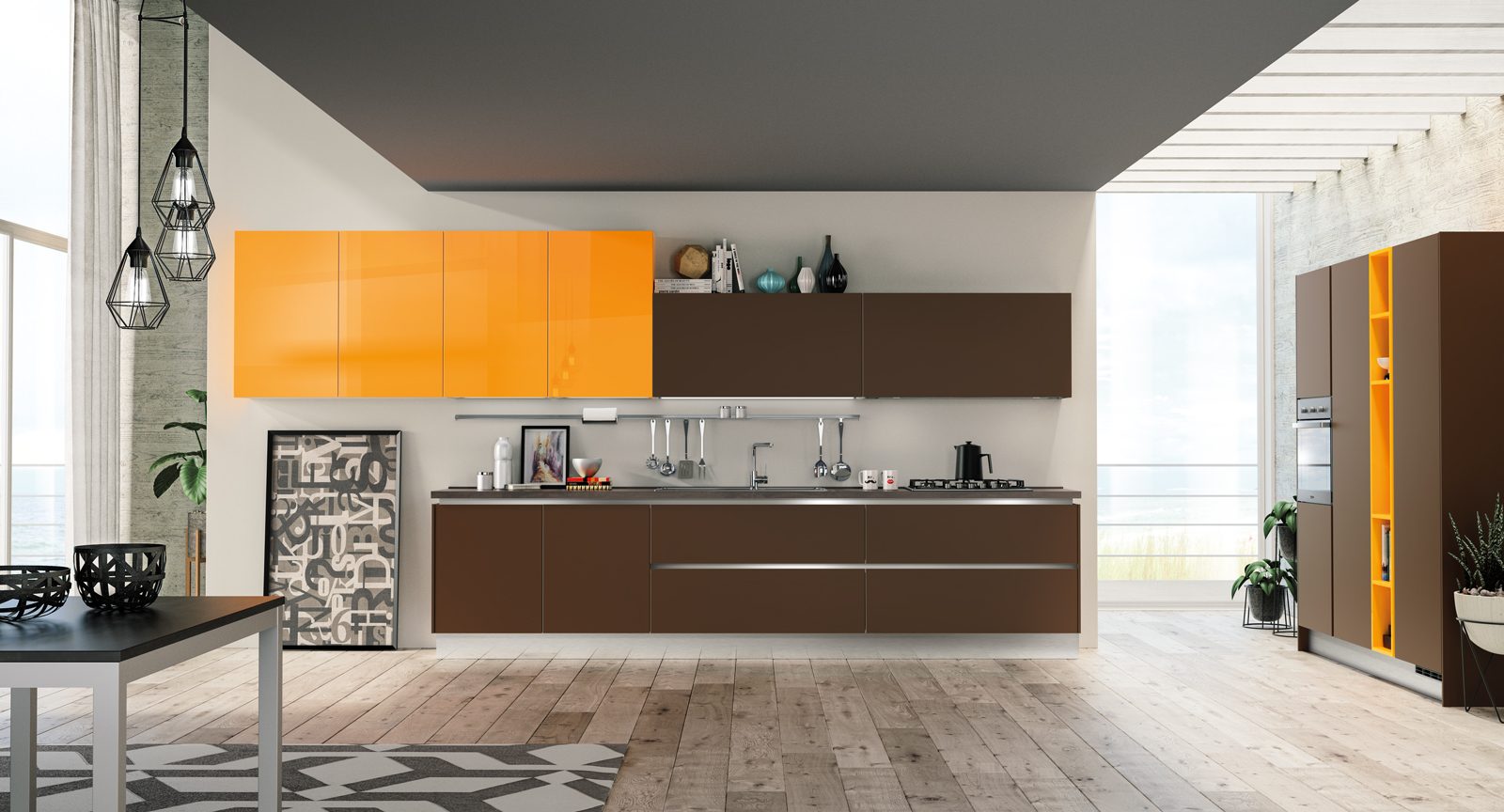
Gloss lacquer
It reflects light and makes a room look larger and brighter — it works especially well in small or internal kitchens. It needs wiping a little more often, because it shows fingerprints more.
80 shades · 5 houses
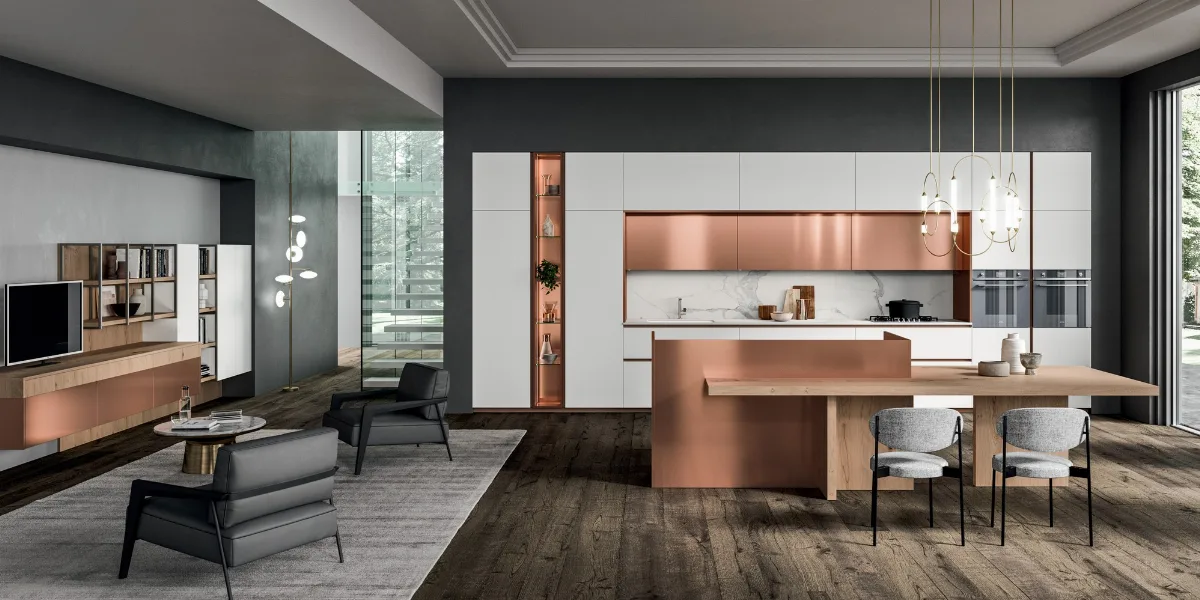
Metallic lacquer
Lacquer with a metallic pigment: it shifts tone depending on the angle you look at it. Pedini has four separate systems — Ossidato, Hybrid, Anodyc and Anticato. We usually suggest it on an island or a single tall unit, not across a whole kitchen.
32 shades · 5 houses
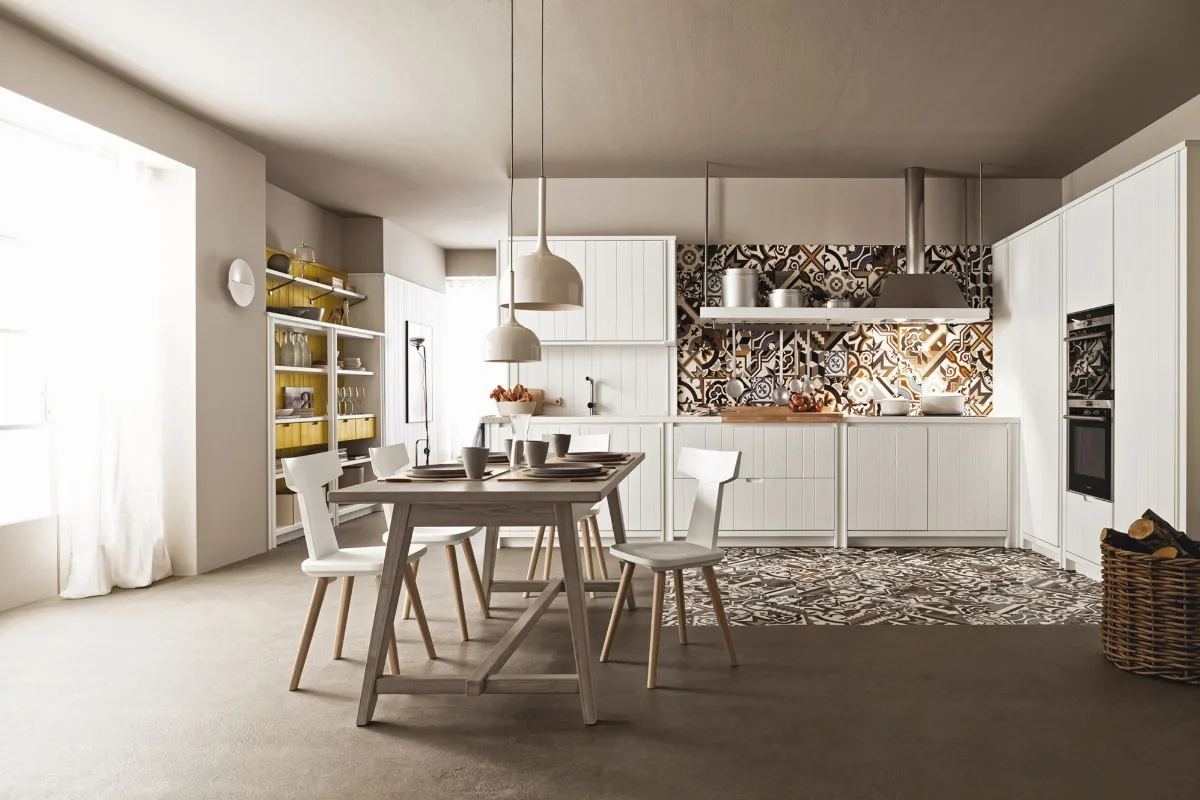
Brushed lacquer
The lacquer is brushed so the texture shows faintly under the colour. It gives a handcrafted character and suits classic and country compositions.
51 shades · Callesella
The numbers are the sample books we hold in the showroom, counted per house — not an estimate.
The shades people ask for most
Four families cover almost every kitchen we design. Every colour below genuinely exists in the sample books — you can see it and touch it in the showroom.
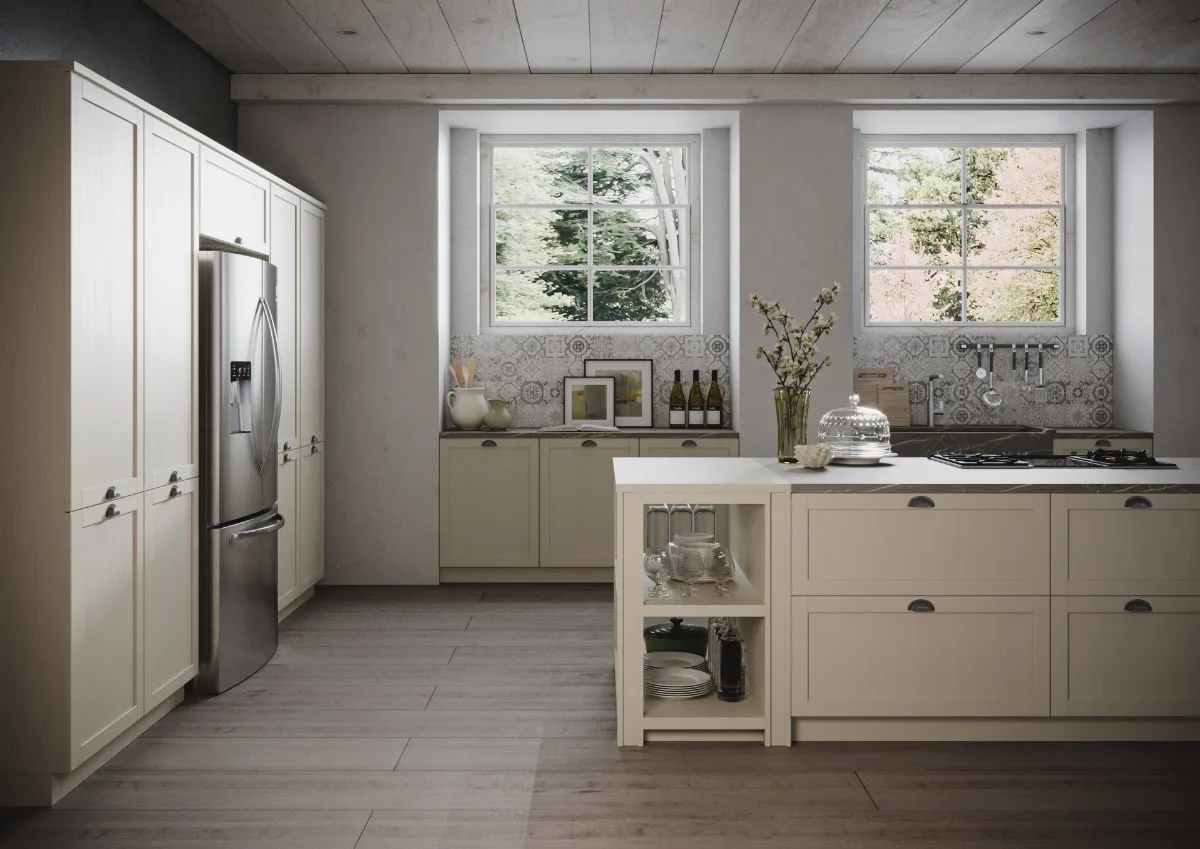
White & cream
The most requested, and the most misunderstood: there are dozens of whites, and the right one depends on your room and on the worktop. A cool white next to warm wood jars; a cream white ties it together.
Bianco puro — Febal Casa
Bianco Gesso — Gentili Cucine
Bianco Latte — Scandola Mobili
Neve — Callesella
Bianco — Pedini Cucine

Black & anthracite
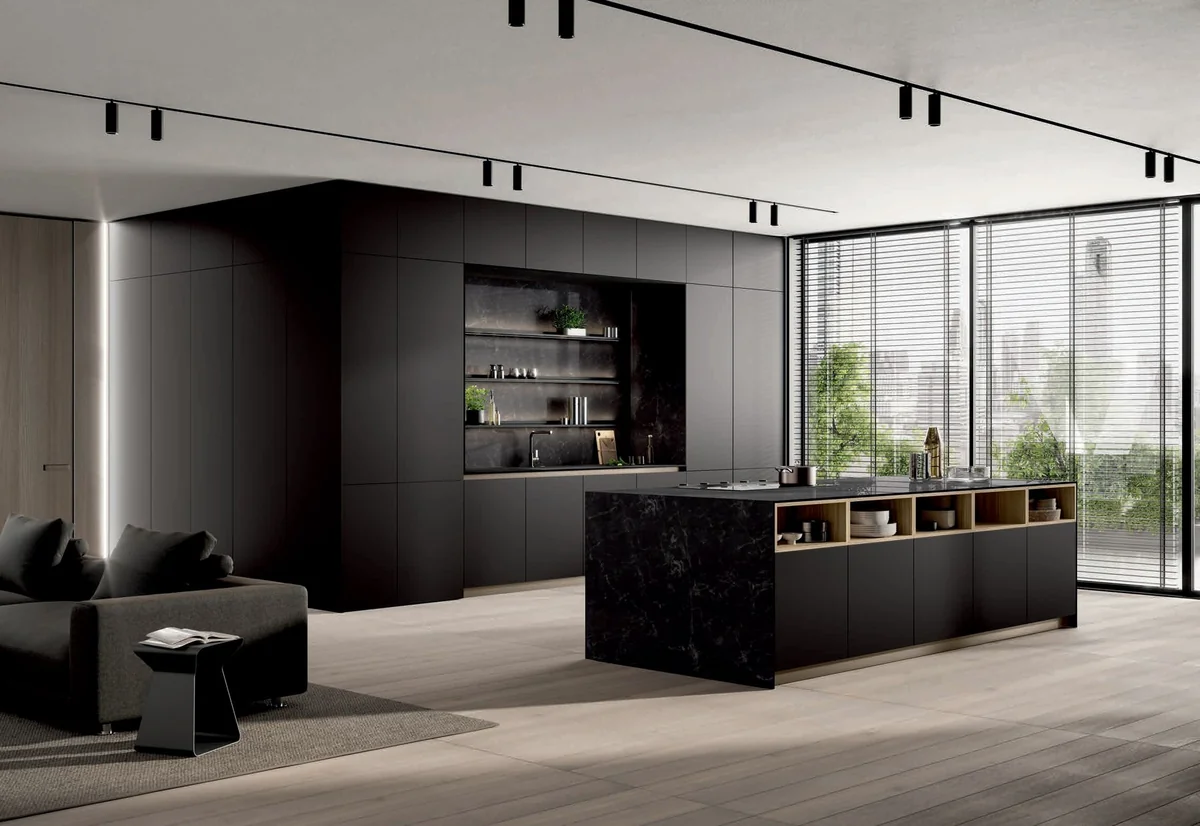
It gives a dramatic result and works best when it is not everywhere: a black island with light tall units, or black base cabinets with a pale worktop. In gloss, black becomes almost a mirror.
Nero intenso (gloss) — Febal Casa
Nero — Gentili Cucine
Nero Ingo — Pedini Cucine
Antracite — Sira Cucine
Antracite — Callesella

Beige, mocha & earth tones
The family growing fastest in recent years — warm neutrals that tie in with wood and with stone. Pedini also has back-lacquered glass in mocha, which feels quite different from matt lacquer.
Beige antico — Sira Cucine
Vetro Retrolaccato «Moka» — Pedini Cucine
The lac-earth family — Febal Casa
Tortora & Nocciola — Callesella

Grey
The safe neutral, from a light perla to a deep anthracite. It works with almost any worktop, and it is the colour we suggest when someone wants something understated but not white.
Grigio antracite — Febal Casa
Grigio Seta — Febal Casa
Mercurio (metallic) — GF Interiors
Grey palette — Sira Cucine
The names are the houses’ own codes. They do not guarantee availability in every programme — we check that together at the design stage.

Lacquer with wood
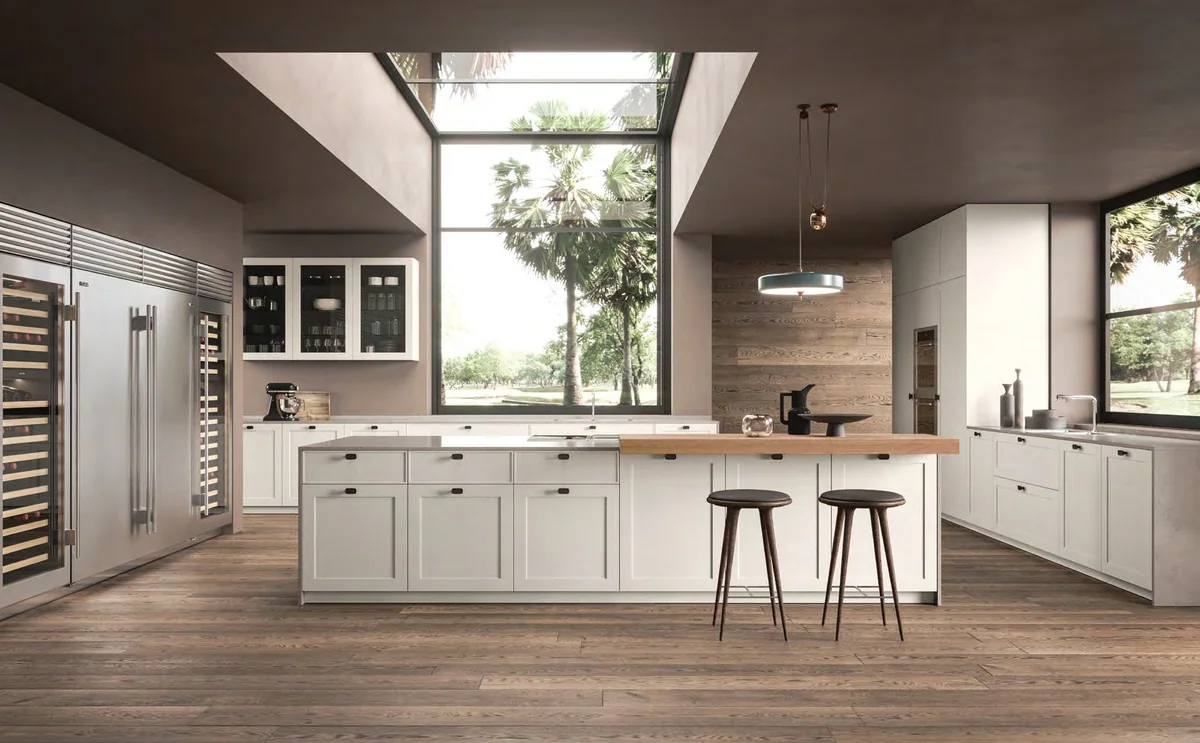
The combination asked for more and more: lacquered cabinets in white or grey, with oak or walnut veneer on a tall unit, on the island or on the shelves. The lacquer keeps the room clean, the wood gives it warmth.
It works because the two materials do different jobs: the lacquered surface is the one you touch every day and want to clean easily, the wood is the one you look at. At the design stage we try the combination on the real samples, in your own light — not in a photograph.
How we choose a shade together
Choosing the colour is where most people get stuck. This is how we unblock it.
01
We start from the light
North or south, natural or artificial — the same white looks completely different. We ask about the room first, not about the colour.
02
We settle the worktop first
The worktop has fewer options than lacquer. Once it is decided, the shades that suit it narrow down on their own.
03
Matt or gloss
A decision about maintenance and feel, before colour. It usually settles in two minutes in front of the samples.
04
Two or three samples, not twenty
We keep a few options and look at them side by side. Past three, the decision gets harder, not easier.
05
You see them on the moodboard
Lacquer, worktop, wood and appliances together, in your own layout — so you see the whole before you decide.
06
A last look in the light
Before we place the order, we look at the shade again beside the worktop and the wood you chose — in daylight and in artificial light. The sample books stay in the showroom, so they are always complete and available when you need them.
The houses that work in lacquer
Callesella Arredamenti
The largest lacquer palette we hold, with an emphasis on brushed — classic and country compositions.
102 shades
Sira Cucine
Matt and gloss lacquer by model, together with patinas and décapé in the classic ranges — and lacquered solid ash.
92 shades
Gentili Cucine
Laccato Opaco, Lucido and Metal, as well as lacquered oak and walnut veneer.
79 shades
Febal Casa
Neutrals, greys, earth tones and bold colours, with a separate Metal Skin range.
60 shades
Pedini Cucine
Matt, gloss, microtexture and back-lacquered glass — and four separate metallic lacquer systems: Ossidato, Hybrid, Anodyc and Anticato. Plus lacquer in a RAL shade to order.
60 shades
Scandola Mobili
Matt lacquer and brushed lacquer, in the style of its classic and alpine compositions.
56 shades
GF Interiors
A balanced palette of matt and gloss, with a strong range of metallic lacquers such as «Mercurio».
55 shades
Models with lacquered compositions:

Lacquer does not stop at the kitchen
The same finishing logic carries through the whole home — and often that is what makes a home look of a piece: the same shade in the kitchen, on the door and in the bathroom.
Barausse — internal doors
Water-based matt lacquer on all its hinged and flush doors, and gloss lacquer with ABS resin. The frame is solid fir with an HDF panel over 800 kg/m³, so the leaf stays true.
17 lacquer shades
Arbi Arredobagno — bathroom furniture
The largest lacquer palette outside the kitchen: matt and metallic shades across six colour families, and special RAL shades to order. On the Crystal glass tops the coating is a water-based lacquer that does not yellow.
56 lacquer shades
Atelier Casabella — boiserie & panelling
Lacquered timber wall panelling and compositions, in shades defined by RAL code — such as Bianco Latte RAL 9010. The solid-wood products are formaldehyde-free and the engineered ones sit below the class E1 limits under UNI EN 717-1.
lacquered boiserie
When the kitchen, the doors and the bathroom are designed together, the shade is worked out once and matches everywhere. It is the job we do more often than you would think.
What «good lacquer» actually means
The difference between lacquer that lasts and lacquer that does not is invisible in a photograph. It shows in the construction.
Painted on every side
A properly made lacquered door is painted on every side, not only the front. That way it does not move with humidity and does not peel at the edges.
The substrate: MDF or solid wood
Lacquer does not go only onto MDF. MDF takes colour evenly and allows the door to be routed; solid wood is lacquered too and keeps its own texture under the colour. On engineered substrates we always ask for low-formaldehyde, class E1.
Polyurethane coating
Harder and more resistant to yellowing than ordinary paints — the standard at the Italian factories we work with.
Edging and thickness
On the faced versions a 2 mm ABS edge protects the corner, which is where a kitchen wears first.
The above are the specifications the factories themselves state in their technical literature; we show them at the design stage.
Why two lacquers are not the same thing
The word «lacquer» on its own says nothing about quality. In the mass market the same word covers everything — from two hurried coats of industrial paint to a finish worked by hand. We do not operate across that whole range: every house we curate sits at the top of it. Here is what that means in practice.
Coats and preparation
On Pedini’s gloss doors the door is brushed and given six coats of lacquer per side. Febal starts with a closed-pore preparation, lays down a base and a patina and finishes with a polyurethane or acrylic top coat. That is where the depth of the colour comes from — and the reason it does not sink in patches.
Water-based varnishes
Scandola paints with ecological water-based varnishes. Callesella states outright «water-based varnishes only» for its solid-wood ranges, and Barausse works in water-based matt lacquer on its hinged doors. We do not generalise from that, though: where a price list does not state the chemistry of the coating, we do not assume it — we ask.
Painted on all six sides
GF Interiors’ lacquered door is painted on all six sides, with polyurethane bonding and a 2 mm ABS edge. On cheap construction only the front is painted — and the edges are the first thing to go.
A substrate that lasts
Febal works with 3 mm HDF faced on both sides, low-formaldehyde CARB P2, with a door thickness of 1.8–2.3 cm. Gentili seals the visible edges with 0.8 mm ABS and polyurethane bonding. Callesella lacquers both: 22 mm class E1 MDF in the Atelier range, and solid fir in the country ranges. Sira also lacquers solid ash. At Scandola the lacquer goes straight onto solid fir.
All of the above comes from the houses’ own official price lists. We do not compare ours against each other — they are all in the same class, and that is exactly why we chose them.
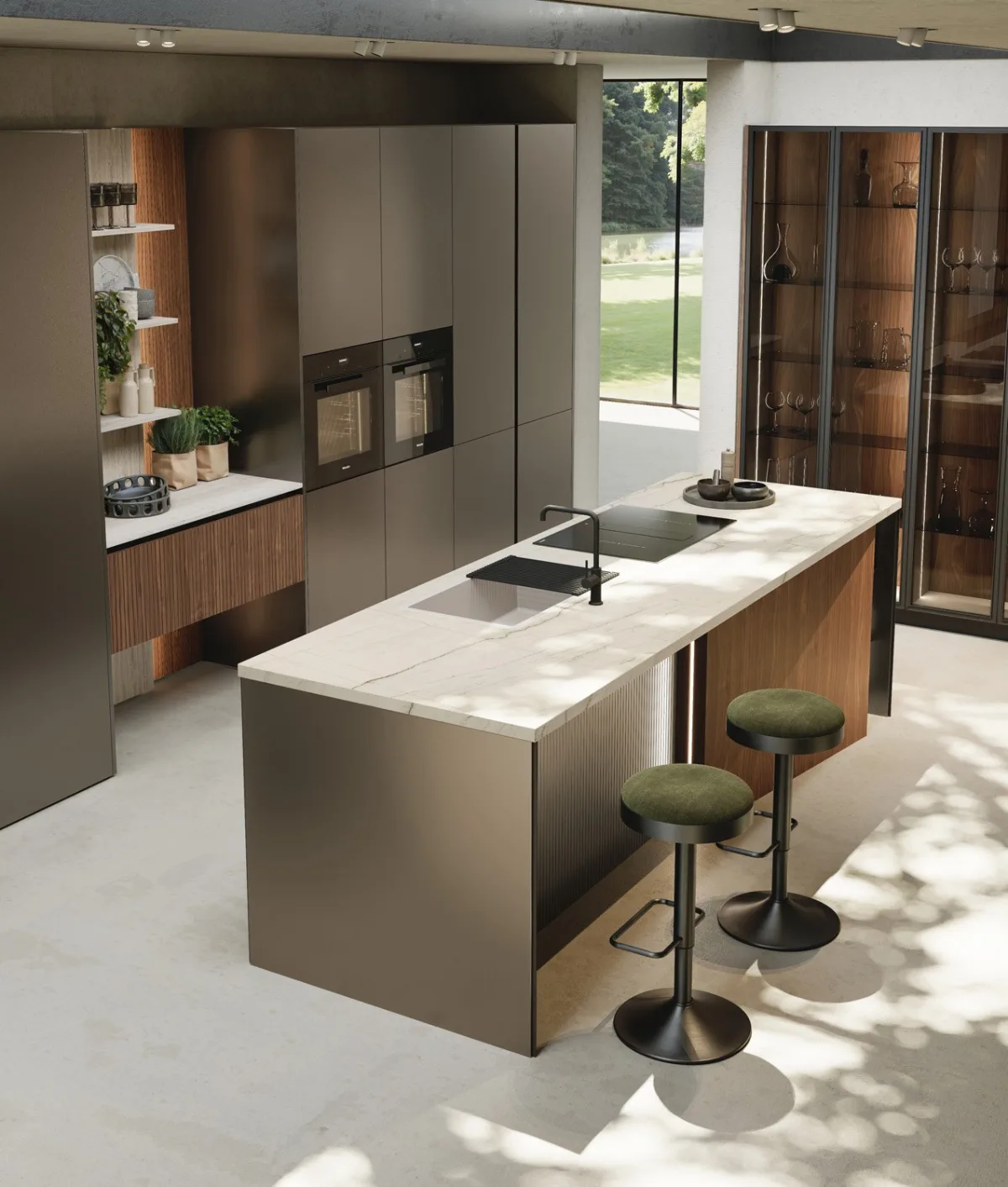
Lacquered kitchens we have designed

What a lacquered kitchen costs
We do not publish a price list, because two kitchens in the same colour can be far apart in cost. Here is what actually moves it:
Matt lacquer
€€€
The entry point into lacquer, and the most common choice.
Gloss lacquer
€€€
More coats and polishing — it rises compared with matt.
Metallic lacquer
€€€€
A special pigment and a more demanding application.
Hand-applied patina / décapé
€€€€
Worked by hand, piece by piece. The top end.
A special RAL shade
+
Outside the sample book, made to order at the factory.
The 3D design for the presentation is free. The quotation is made on your own layout, with the materials you chose.
Frequently asked questions
What is kitchen lacquer?
It is a painted surface: layers of colour and varnish are applied and the door is ideally painted on all six sides. The substrate can be MDF or solid wood — both are lacquered. It comes in matt, gloss, metallic or brushed versions.
Matt or gloss lacquer — which should I choose?
Matt hides fingerprints far better and gives a quiet result. Gloss reflects light and makes a room look larger, but needs wiping more often. In a small or internal kitchen we usually suggest gloss.
Does lacquer scratch or yellow?
A polyurethane lacquer from an Italian factory resists yellowing and everyday use. It will scratch if you strike it with something hard, as any painted surface will — which is why the edging and the thickness of the door matter.
Can I have any colour?
Within each house’s sample book, yes — we are talking about dozens of shades per programme. In some programmes a special RAL shade can also be made to order. If you have a particular colour in mind, bring it and we will check it.
Is a lacquered kitchen easy to clean?
Yes — a soft cloth and a mild cleaner are enough. We avoid abrasive pads and cleaners containing acetone or alcohol, which can dull the varnish.
How long does a lacquered kitchen take?
Delivery usually runs from 4 to 12 weeks once the order is finalised, depending on the house and the shade. Special RAL shades and hand-applied patinas sit at the upper end.
Does lacquer only go onto MDF?
No. MDF is the most common substrate because it takes colour evenly and allows the door to be routed, but lacquer goes onto solid wood too. Callesella paints solid wood in its ranges and Gentili has lacquered ash (Frassino Laccato) in its classic line.
From the idea to your kitchen
«They give really good service» — and usually clever ideas about colour that you had not thought of.