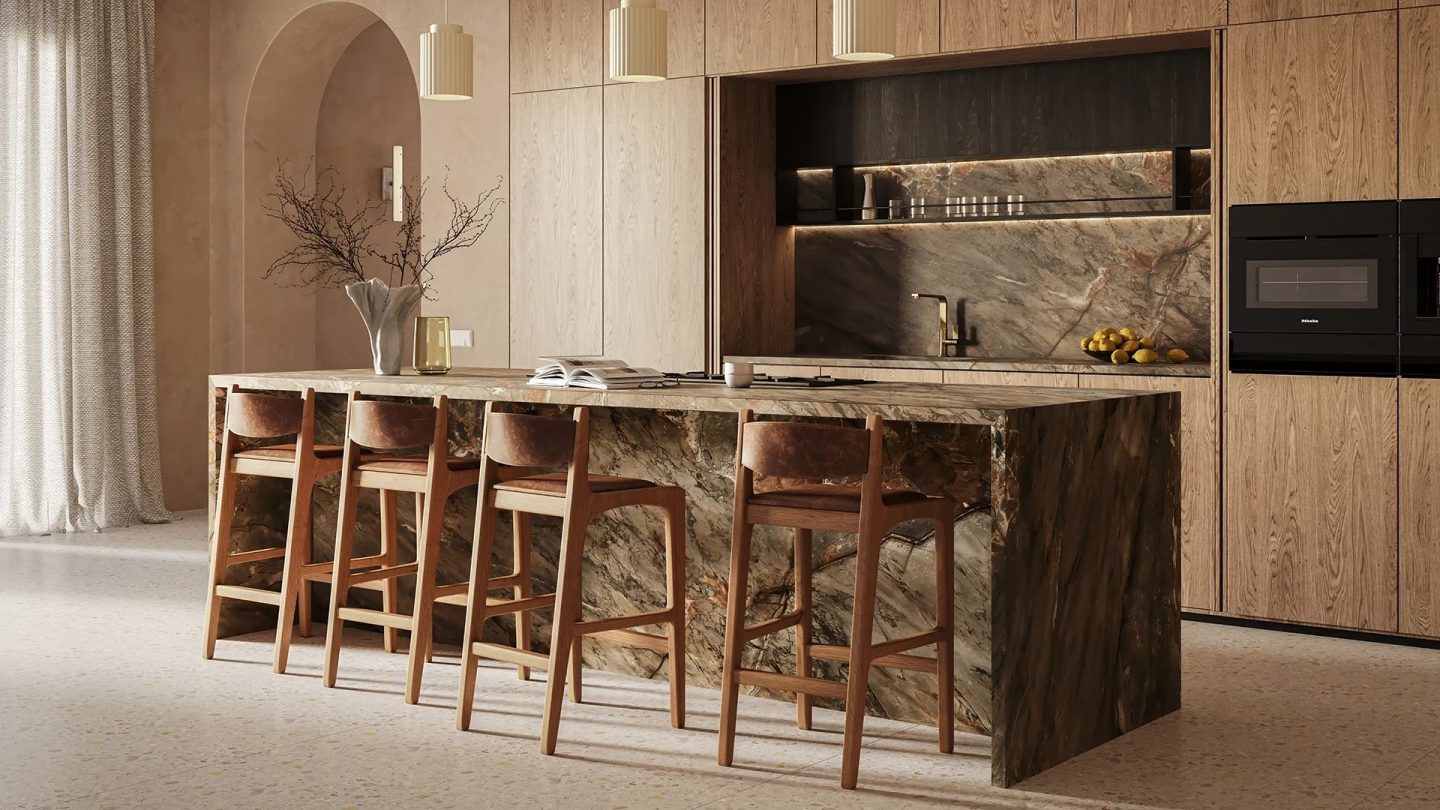
Guide · Kitchen worktops
We choose your worktop together.
Nine materials that we curate. Start from how you live in your kitchen; we settle the rest in the design study.
Book a design appointment →The short answer
Quartz, granite or ceramic?
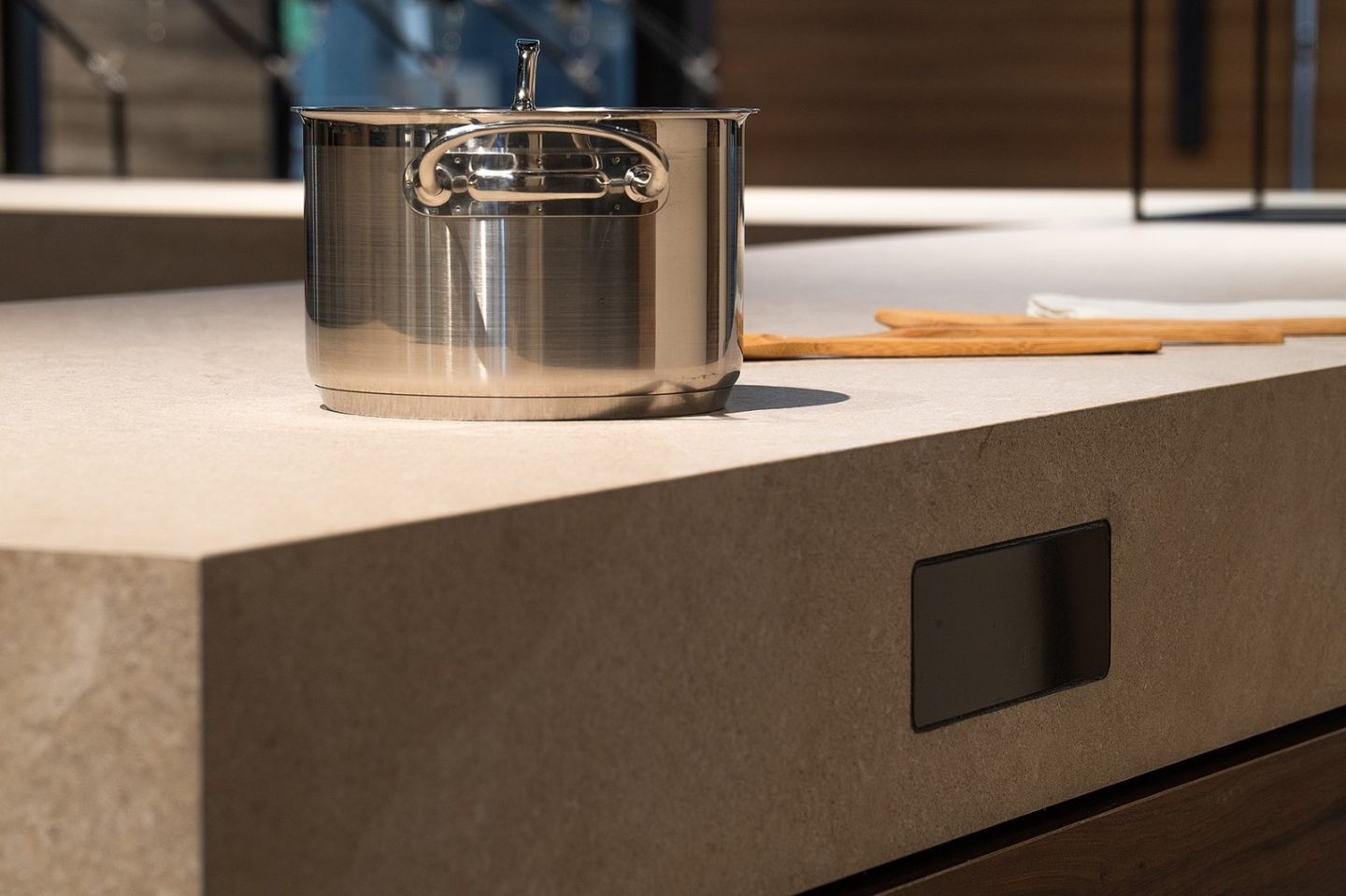
If you want a surface that needs no sealing and comes in many colours, quartz. If you often put hot pans down or want an Invisacook hob under the worktop, ceramic: porcelain or sintered stone. Granite is a natural stone, hard and heat resistant, but porous, so it needs periodic protection. We curate Caesarstone quartz and porcelain and Ascale sintered stone; not granite. We choose the final combination together with you, during the design study.
| Comparison | Quartz | Granite | Ceramic (porcelain, sintered stone) |
|---|---|---|---|
| What it is | Quartz Engineered slab of quartz and resin (Caesarstone) | Granite Natural stone | Ceramic (porcelain, sintered stone) Ceramic slab: Caesarstone porcelain or Ascale sintered stone |
| Stains and sealing | Quartz Non-porous, needs no sealing | Granite Porous, needs a periodic water-repellent treatment so it does not stain | Ceramic (porcelain, sintered stone) Porcelain needs no sealing; sintered stone absorbs up to 0.1% water |
| Hot pans | Quartz Use a trivet; Caesarstone recommends protection above 150 °C | Granite Heat resistant | Ceramic (porcelain, sintered stone) Resistant to heat and UV |
| Scratches | Quartz Scratch resistant | Granite Very hard | Ceramic (porcelain, sintered stone) Very hard surface |
| Thicknesses | Quartz 13, 20, 30 mm | Granite — | Ceramic (porcelain, sintered stone) Porcelain 6, 12, 20 mm · sintered 12 or 20 mm |
| Invisacook hob | Quartz No | Granite No (untreated granite is not compatible) | Ceramic (porcelain, sintered stone) Yes, in 12–20 mm |
| At MobilCasa | Quartz Yes, Caesarstone | Granite No | Ceramic (porcelain, sintered stone) Yes, Caesarstone and Ascale |
The quartz, porcelain and sintered stone details come from the Caesarstone and Ascale technical sheets and care guides; the granite details from Febal Casa's worktop guide.
Where to start
Tell us how you cook.
No material is the “best”. There is the one that suits your own daily life. Choose the phrase that sounds like you.
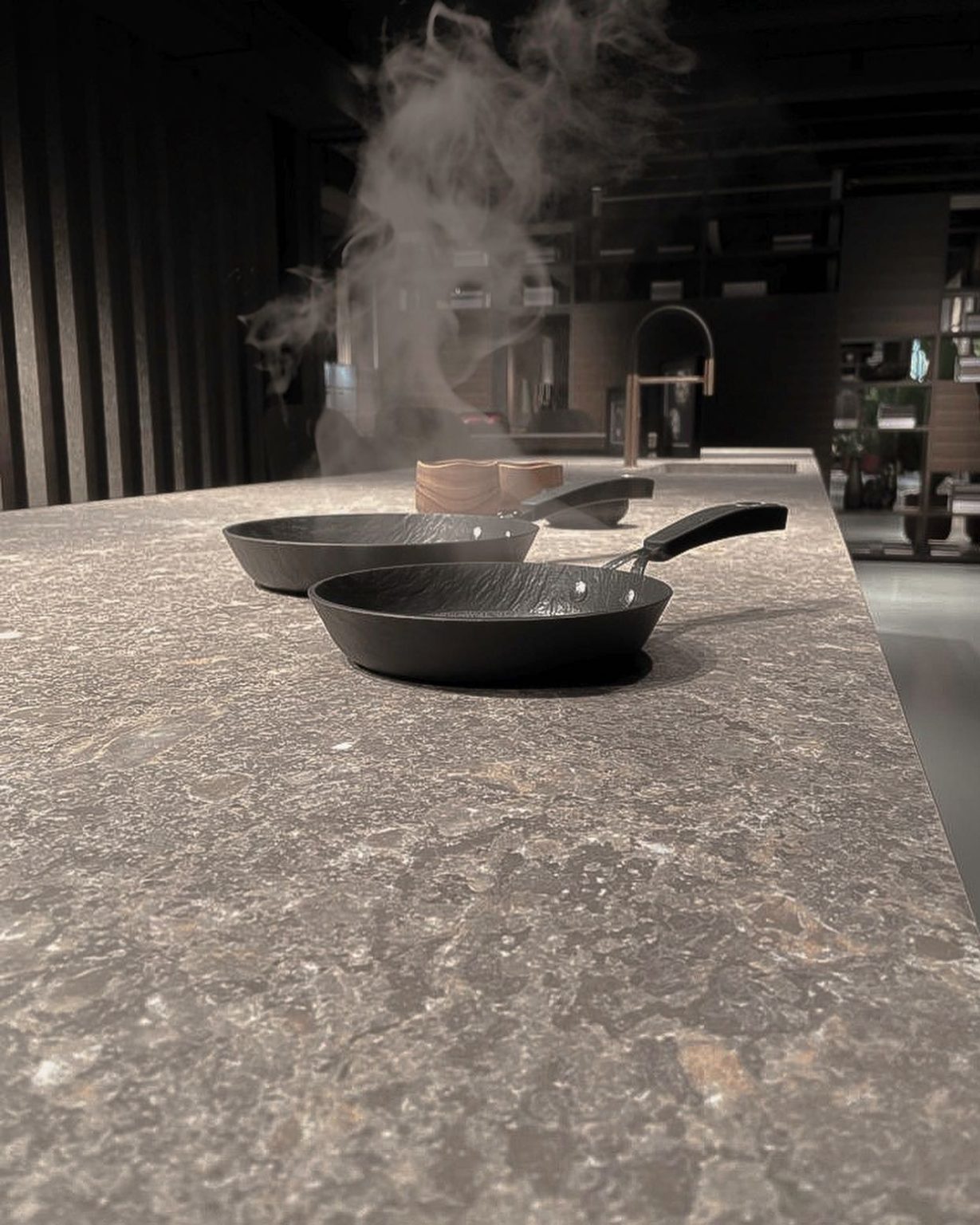
I want to cook right on the worktop itself.
The Invisacook hob needs porcelain or sintered stone, 12 to 20 mm thick. Quartz, laminate and wood are not compatible.
I want a worktop that withstands heat.
Porcelain, sintered stone and inox withstand heat.
I want warmth and a soft touch.
Wood gives warmth; Fenix is matt and does not hold fingerprints.
I do not know yet.
No problem. We work it out together, at the first appointment.
Slabs Caesarstone & Ascale
We curate them with you, from the slab to the edge.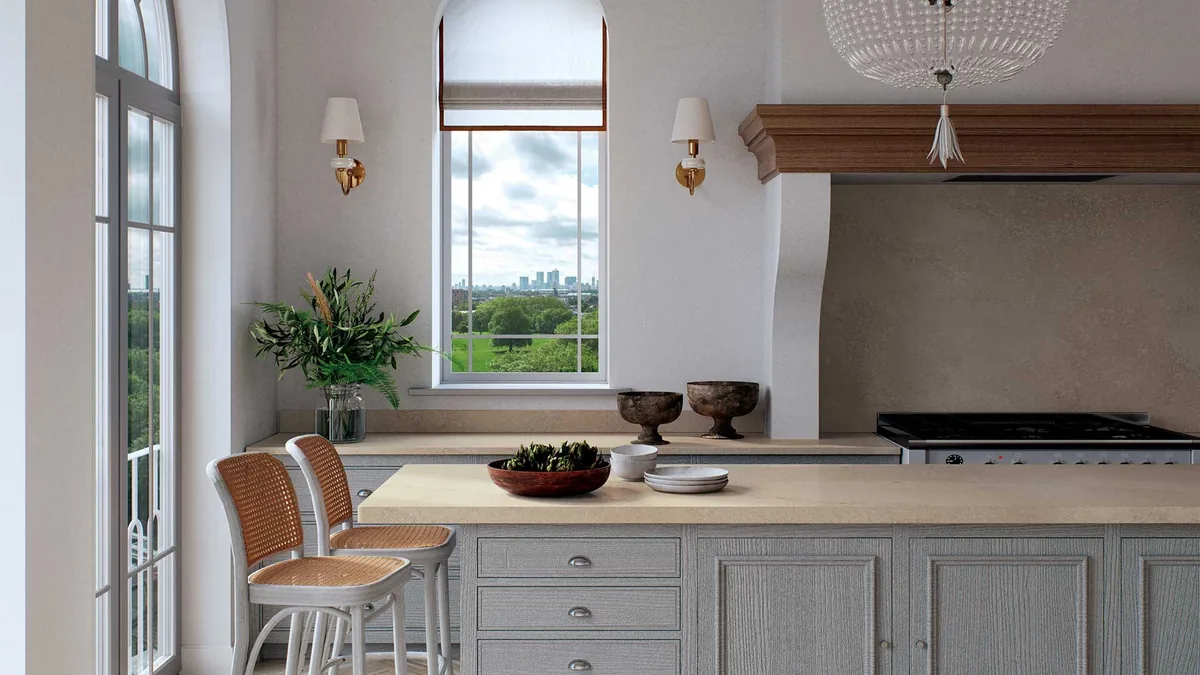
CaesarstoneQuartz
Non-porous, resistant to scratches and stains. It needs no sealer or wax.
Choices36 colours
Thicknesses13, 20, 30 mm
Costhigh
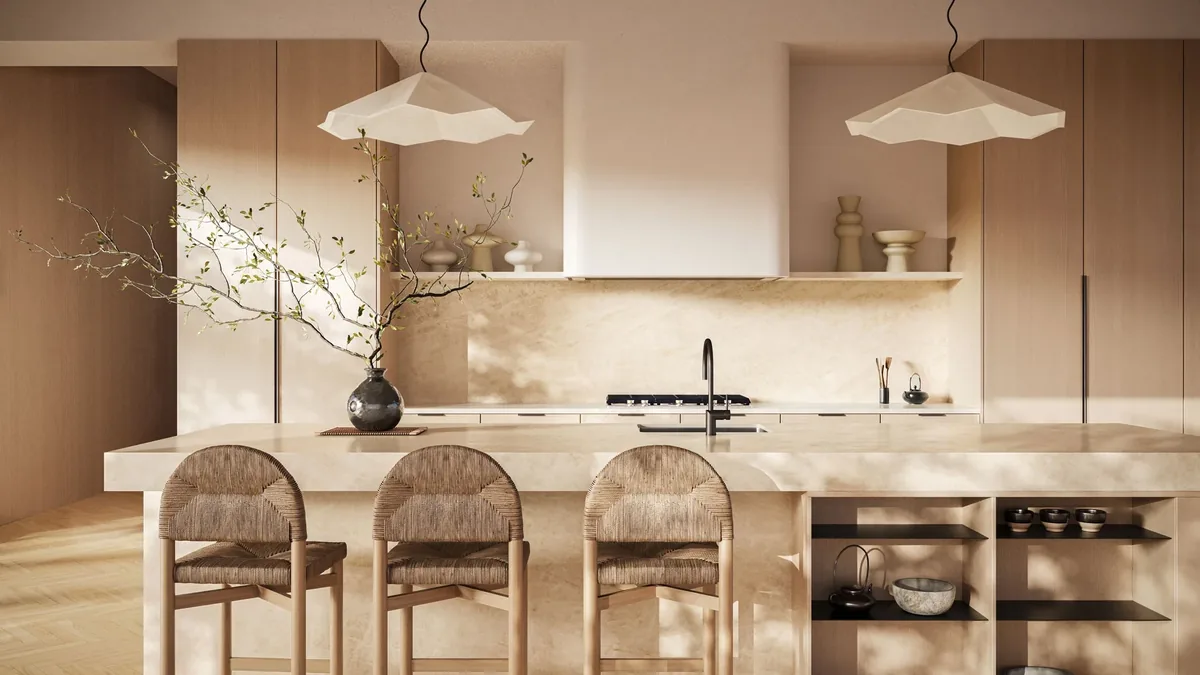
CaesarstonePorcelain
Very hard, resistant to heat and UV. No sealer or wax.
Choices62 designs, 320 × 160 cm slab
Thicknesses6, 12, 20 mm
Costhigh
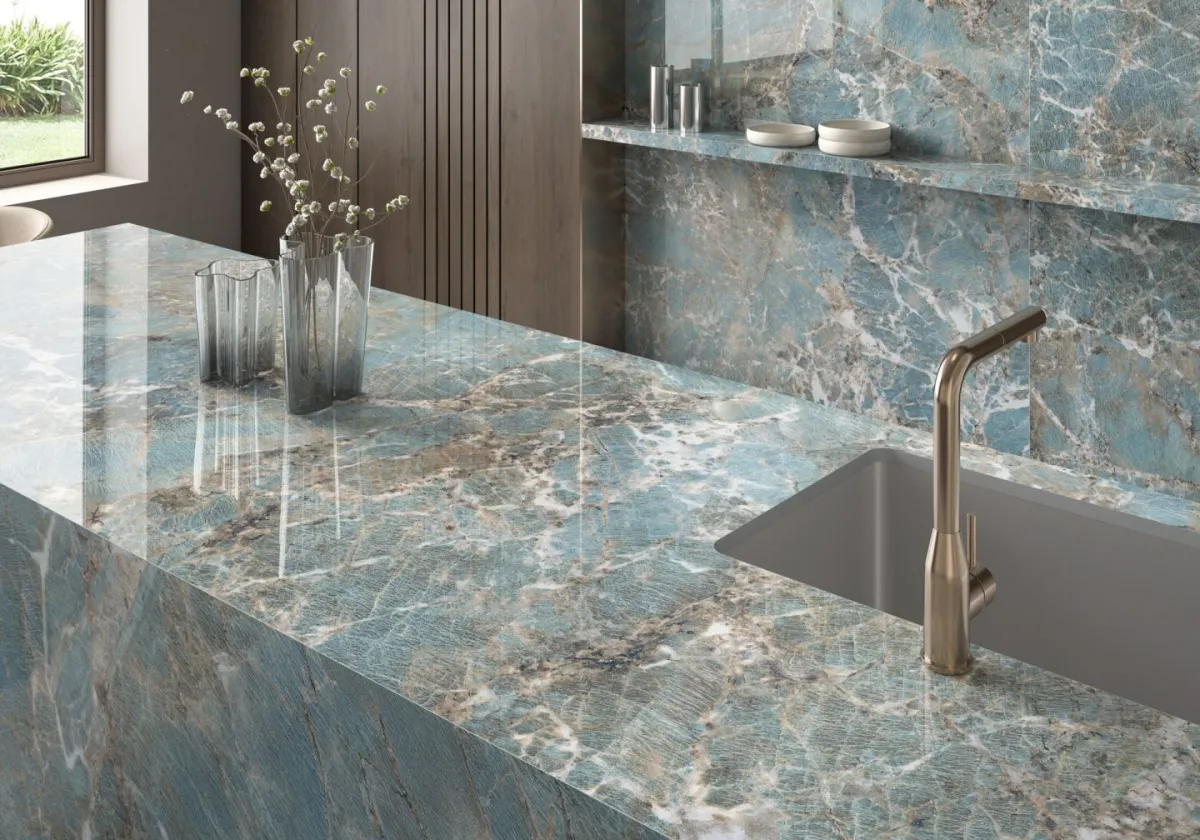
AscaleSintered stone
Absorbs up to 0.1% water. Resistant to heat, UV and stains, with easy maintenance.
Choices51 colours, slabs up to 162 × 324 cm
Worktop thicknesses12 or 20 mm
Costhigh
Together with your kitchen
From the houses we curate, and Corian following a design study.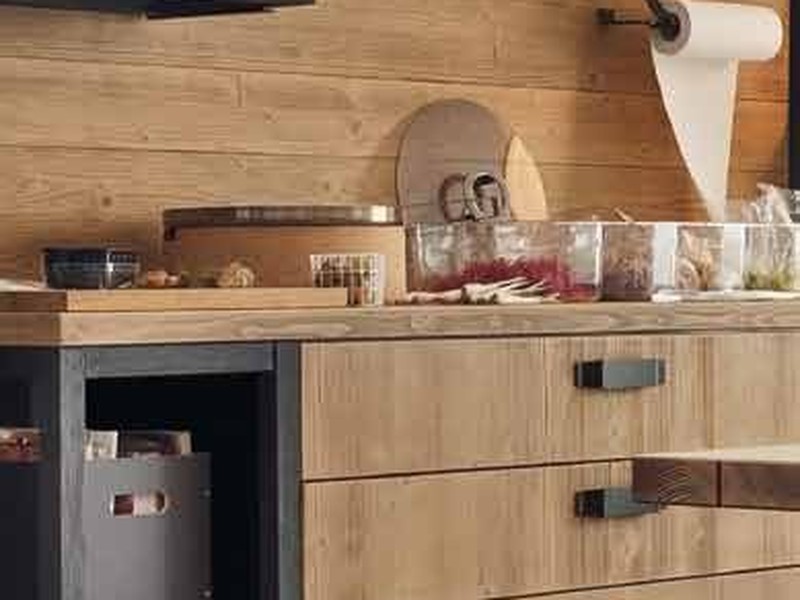
Callesella Fly · solid wood worktop
Solid Wood
It brings warmth. It pairs naturally with a solid wood kitchen.
HeatLow durability
CarePeriodic care
Costmid

Gentili Time Metropolitan Mood · laminato worktop
Laminate laminate
Water-repellent particleboard with high-pressure laminate: hard, non-porous.
HeatNo hot cookware directly
Thicknesses2, 4, 6 cm · length up to 418 cm
Costeconomical

Febal Origina · Fenix Beige Arizona worktop
Fenix
Matt, with a soft touch. It leaves no fingerprints; micro-scratches are repaired with heat.
HeatUse a trivet for hot pans
Thicknesses1.3 to 6 cm
Costmid
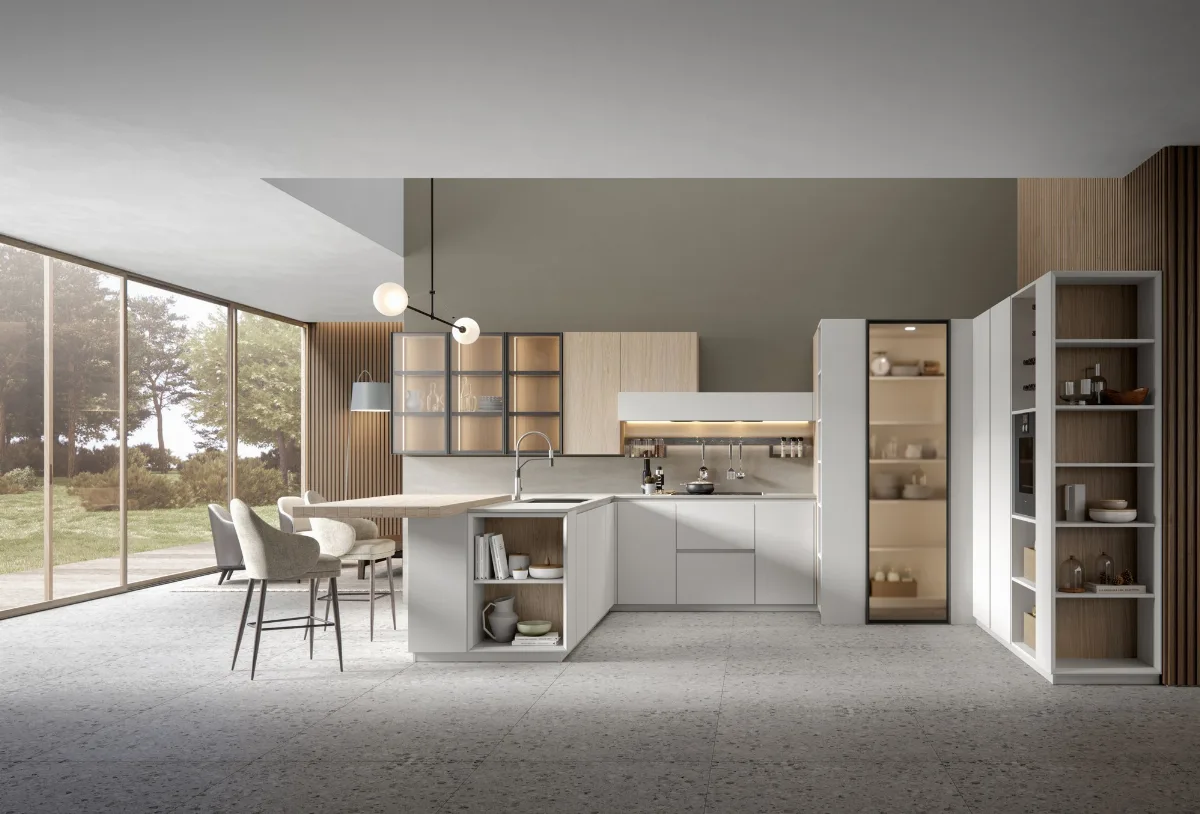
Scandola Eclettica E02 · HPL worktop “Gesso”
HPL stratificato
Solid sheet, non-porous, resistant to scratches and impacts. Stone and wood looks.
HeatTake care with hot pans
Thicknesses1 to 6 cm
Costmid
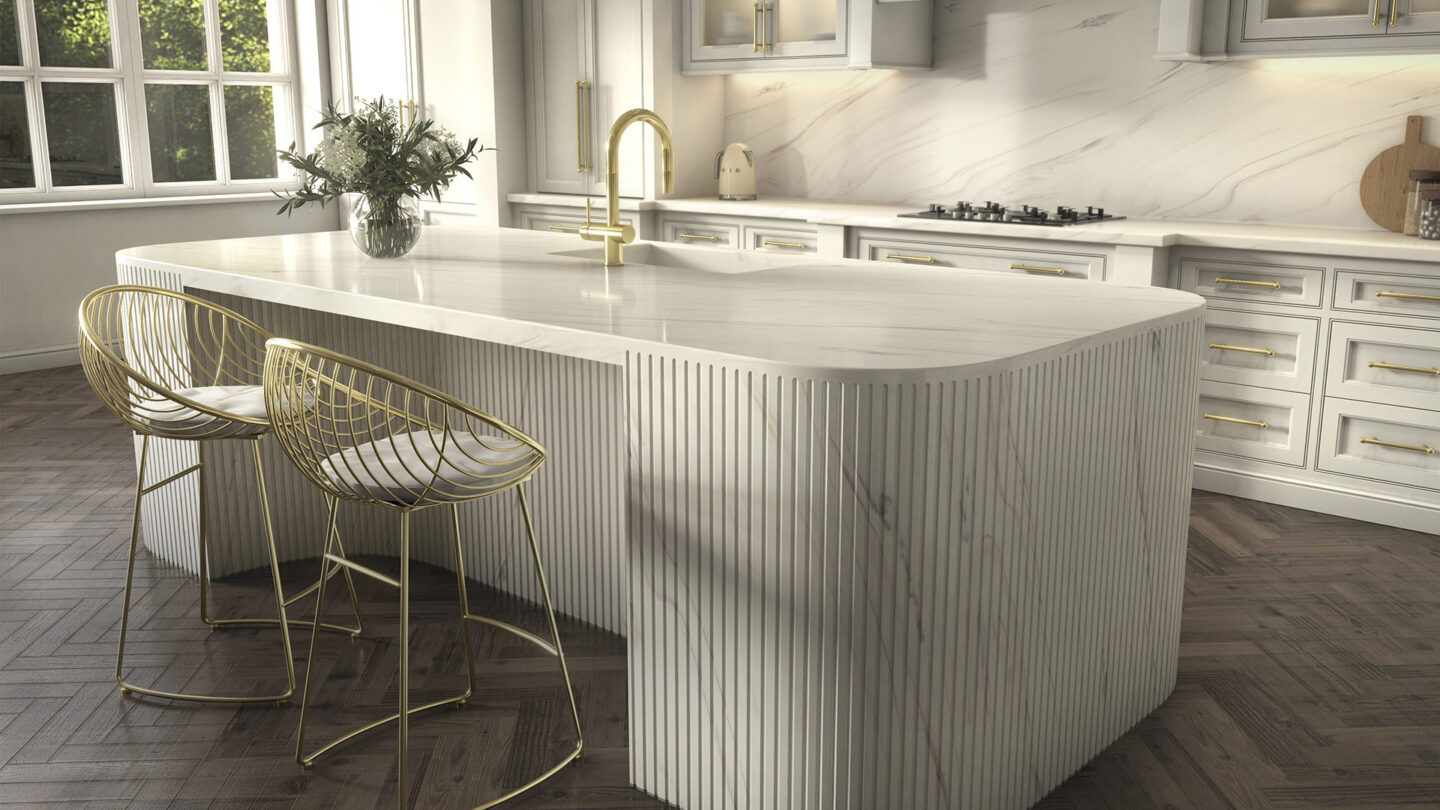
Corian® Solid Surface · DuPont image
Corian solid surface
The pieces are bonded with no visible joint: the island reads as a single body. Scratches come out with sanding.
HeatNo hot cookware directly
ThicknessesOn project basis
Costhigh

Callesella Fly · steel worktop
Stainless steel (inox)
Hygienic and heat-resistant. In satin, matt and vintage; the satin and matt show fewer marks.
ThicknessesDepends on the house
Costmid
Comparison at a glance
Nine materials, three questions.
How well it stands up to use, how well to heat, how much care it needs. Tap a material for its details.
Quartz
high
Porcelain
high
Sintered stone
high
Solid Wood
mid
Laminate
economical
Fenix
mid
HPL
mid
Corian
high
Stainless steel (inox)
mid
The dots are our own reading of each material’s characteristics. The dash means it is not compared in the same way: with Fenix, micro-scratches are repaired with heat; Corian is repaired by sanding.
Thicknesses
The edge, to scale.
This is how the edge of each material looks at the thicknesses it comes in. A 6 mm sheet of porcelain and a 7 cm piece of wood change the whole look of the kitchen.
6 mm
12 mm
20 mm
12 mm
20 mm
13 mm
20 mm
30 mm
1 cm – 6 cm
1,3 cm – 6 cm
2 cm
4 cm
6 cm
3 cm – 7 cm
thickness set after a design study
thickness depends on the house
Filled: the thinnest thickness · outline: up to the thickestAll thicknesses at the same scale
In the design study, with you
Three decisions we do not leave to chance.
The thickness
It sets how far the worktop overhangs without support and how the edge reads. We decide it according to the material and how you use it.
The joint
We place it away from the sink and the hob, where the eye does not land. In Corian it disappears.
The cut-outs
Sink, hob, sockets: they are designed from the start, so that you do not have to go over them with the tradesman.
Frequently asked questions
The questions we hear most often.
Quartz or sintered stone — which should I choose?
Caesarstone quartz comes in 36 colours and needs no sealing; Ascale sintered stone comes in 51 colours and slabs up to 162 × 324 cm. Both resist stains and scratches. For an Invisacook hob, sintered stone works and quartz does not.
Porcelain or quartz?
We curate both from Caesarstone. Porcelain is very hard and resists heat and UV; quartz comes in 36 colours and in 13, 20 and 30 mm. For an Invisacook hob you choose 12–20 mm porcelain.
Fenix or HPL?
If a matt look without fingerprints matters most, Fenix. If you want more stone and wood looks, HPL, taking care with hot pans.
Does a kitchen worktop need maintenance?
It depends on the material. Caesarstone quartz and porcelain need no sealer or wax. Ascale sintered stone is easy to maintain. Solid wood needs periodic care.
Will the joint show on my worktop?
In Corian the joints are bonded and do not show. In the other materials we keep the joint away from the sink and the hob. Whether a joint is needed depends on the layout and the size of the slab; we work it out in the design study.
Quartz or granite for a kitchen worktop?
Caesarstone quartz is non-porous and needs no sealing. Granite is a natural stone, very hard and heat resistant, but porous, so it needs a periodic water-repellent treatment so it does not stain. We curate quartz, not granite.
What is a ceramic worktop?
By «ceramic» we mean Caesarstone porcelain (6, 12 or 20 mm) and Ascale sintered stone (12 or 20 mm). They resist heat and UV; porcelain needs no sealing and sintered stone absorbs up to 0.1% water. In 12–20 mm they also take the Invisacook hob under the worktop.
Can quartz take hot pans?
Caesarstone recommends not placing hot pans directly on the worktop and protecting it from temperatures above 150 °C or sudden temperature changes. Use a trivet. If you want to put the pot down without a second thought, porcelain or sintered stone suit you better.
Design appointment
Design your worktop with us.
Bring your dimensions and your habits. The 3D design for the presentation is free.
267 Mesogeion Avenue, Neo Psychiko, AthensOne appointment at a time
Which material for your kitchen?
Lacquer, veneer, solid wood, Fenix, glass or melamine — what each is, durability, maintenance and cost.
Read the materials guide