Bathroom furniture: how to choose
In short
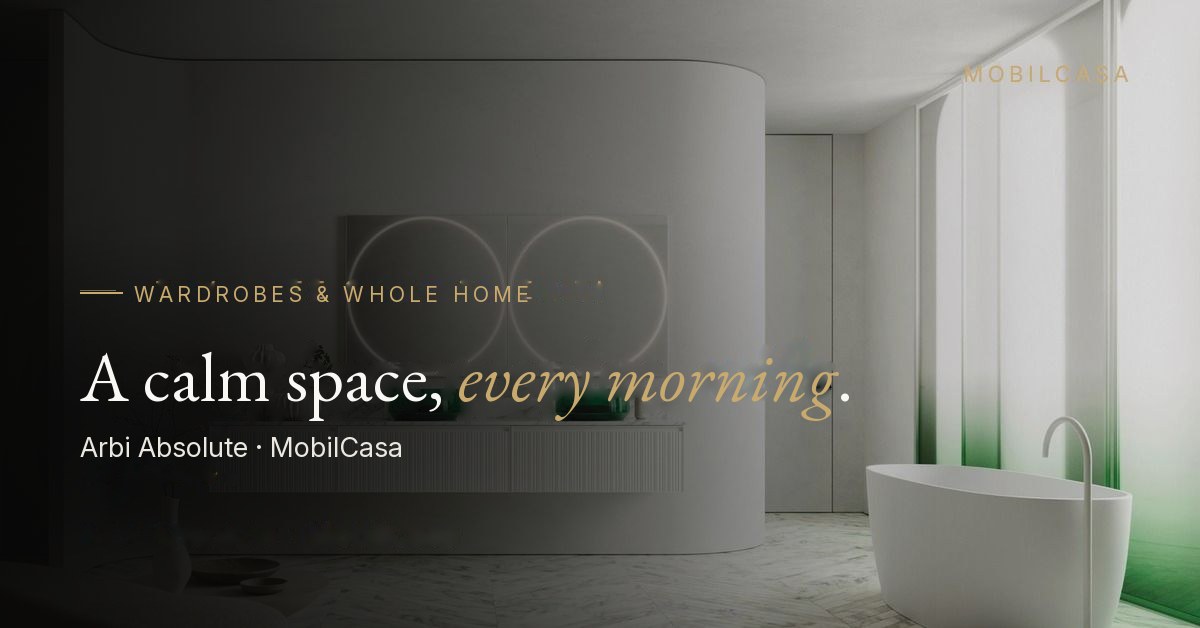
Bathroom furniture is not chosen by colour first. It is chosen by the space, the humidity and how many things it needs to hold. A modular Italian system, like that from Arbi Arredobagno, solves all three, because it is put together to the measurements of your own bathroom instead of arriving in ready-made packages.
- Wall-hung or floor-standing: it changes the feel of the space and how you clean it.
- Moisture resistance is decided by the construction: in the body, the front and the edges.
- The basin and the worktop are one decision, not two.
The bathroom furniture we curate comes from Arbi, which makes it at the 1987 in Maron di Brugnera, Pordenone, in the heart of Italian furniture-making, with about 95% of production inside its own factory. Below are the decisions that make a bathroom, in the order in which we take them with you.
Wall-hung or floor-standing?
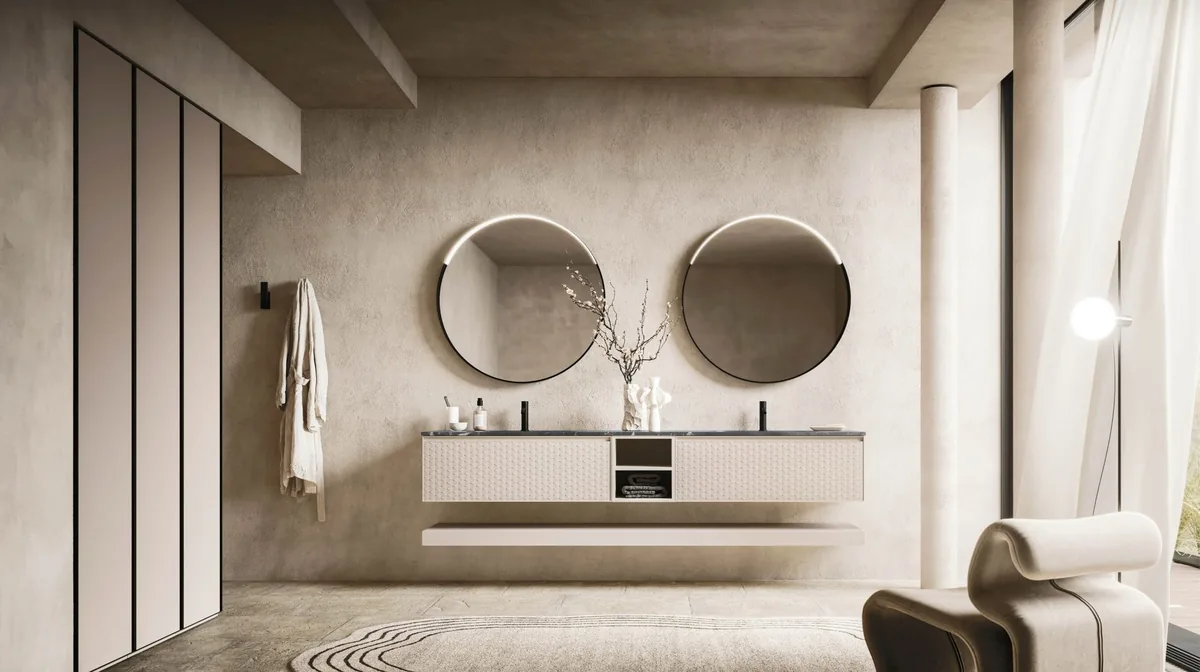
It is the first decision and the most visible. The wall-hung unit leaves the floor free: the space reads as larger, mopping is unobstructed and water does not stand under any base. The floor-standing unit rests on the floor and gives a more solid, more classic presence, and often more usable volume in the same width.
In modular systems both solutions are options of the same programme: the same model, the same colour, two ways of fitting. In Sky, Arbi's best-seller, the wall-hung base units come in depths of 37, 45 and 50 cm and in widths from 25 to 140 cm, so the composition adapts even to a narrow bathroom. A detail you cannot see in the photo: the back of the basin unit is always open, so the drainage passes freely and the same unit accepts different siphon positions without improvised cuts.
What really stands up to humidity
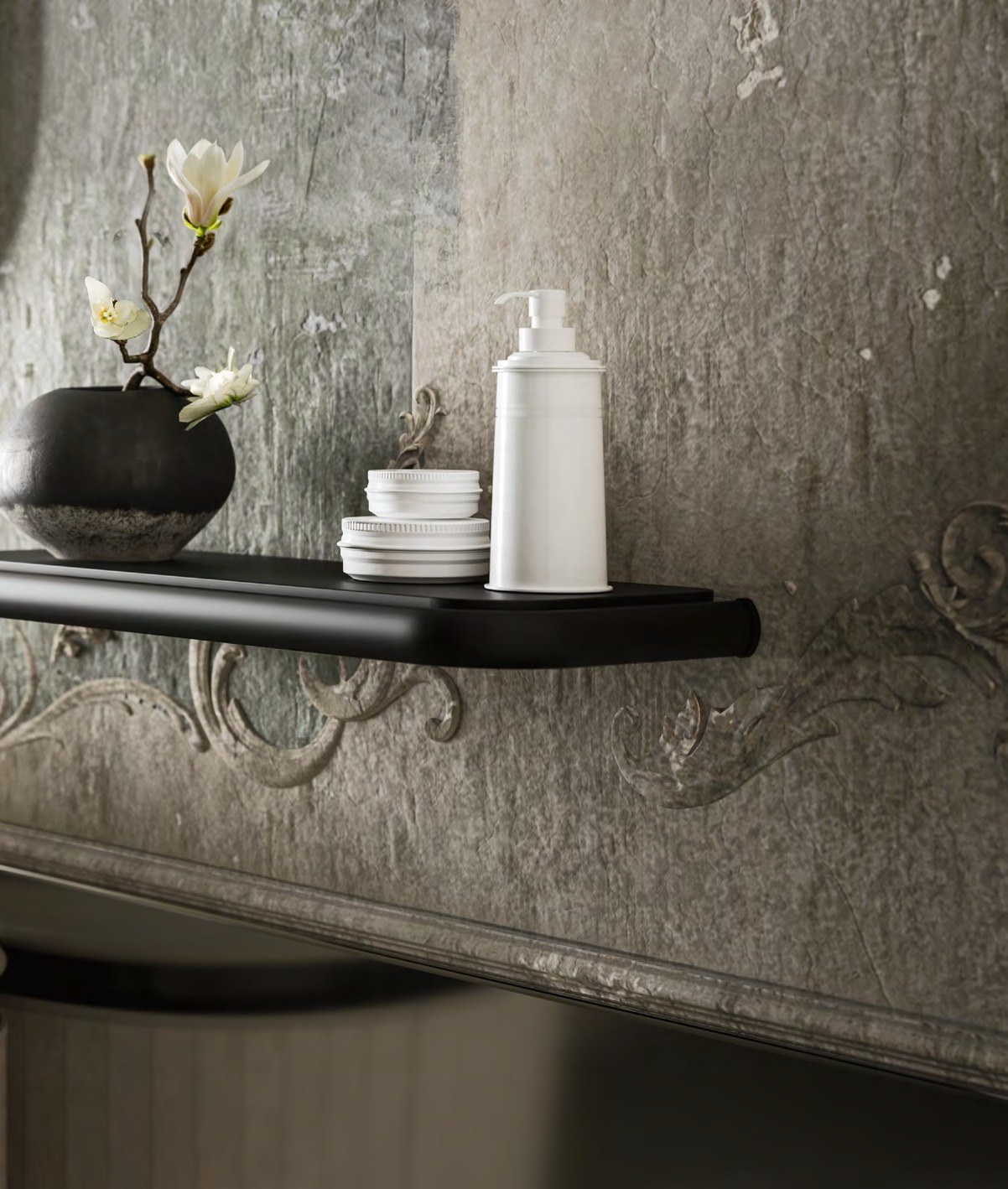
The bathroom is the most demanding room in the house for a piece of furniture: steam every day, water on the surfaces, big swings in temperature. Durability is judged not by the colour but by what lies beneath it.
- Carcase: low-formaldehyde-emission particleboard (class E1) or fibreboard, with a melamine, paint or veneer surface.
- Front: on the lacquered doors, MDF with polyester paint, in some programmes 2.2 cm thick, which gives a noticeably sturdier feel in the hand.
- Shelves: 6 mm glass on the cabinets, 18 mm wood on the tall units.
- Edges: plastic, wooden or laminate. That is where all moisture damage starts, so it is not a detail.
For those who want simple maintenance, the Ho.me Plus works in thermostructured melamine with a wood look or in plain shades. In some models the front is solid wood: the most “alive” option, which needs the care that any solid wood needs. We tell you from the start where it suits and where it does not.
The washbasin and the worktop are one decision
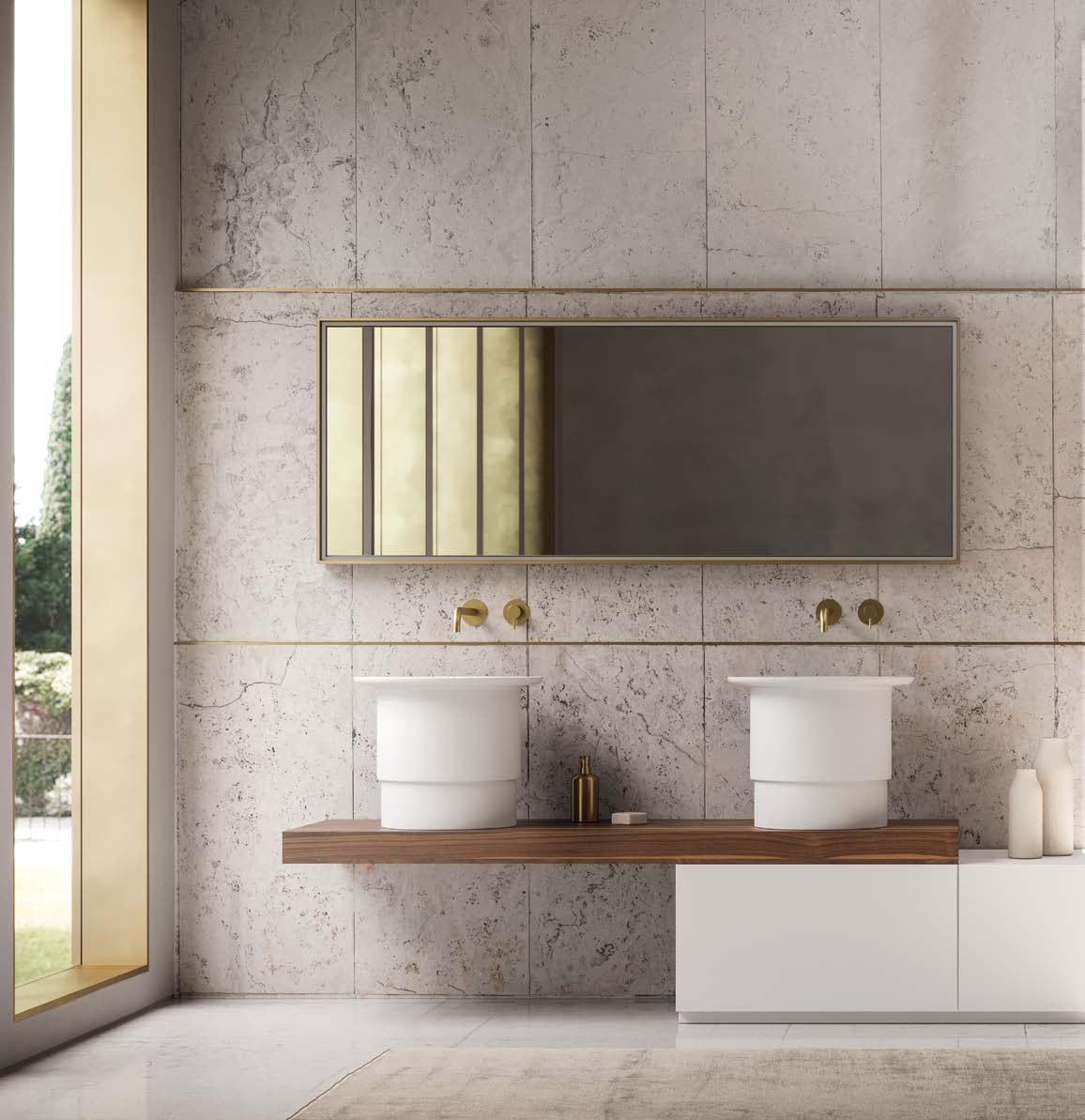
In Italian systems the worktop and basin are often a single piece, cast in the same material. This changes the cleaning, because there is no joint around the bowl, and it changes the feel of the whole. In Sky, Ho.me Plus and Code the worktops with integrated basin come in the same depths of 37, 45 and 50 cm as the base units, and the countertop basins in mineralguss, ocritech, tekno and Fenix.
Overall Arbi offers 11 worktop material categories, from ceramic to Fenix, HPL, glass, marble and quartz. In practice they fall into two thicknesses: the thin ones, around 1 cm, such as glass and mineralguss, and the heavy 2 cm ones, such as marble and quartz. The thickness sets the working height and how “light” or “monumental” the furniture looks. If the worktop also matters to you for the kitchen, we explain the same materials in the kitchen worktops guide.
Colour, without compromise
This is where Italian systems stand apart from ready-made packages. Arbi's colour chart is unified across all programmes: 56 lacquer finishes (Bianco, 51 shades and 4 metallic) in matt, glossy, velvet or metallic finish. Alongside them, a common range of 7 oak shades, walnut and elm veneers, and melamine shades for the plainer programmes. Altogether there are 190 samples, and the same code means the same colour in every programme. You can see them one by one on the page Arbi materials and finishes.
If none of the shades is exactly what you have in mind, a custom RAL paint is available, with a surcharge that applies to the whole composition, not to a single piece. We say this from the start, because it is a decision made during the design study, not afterwards.
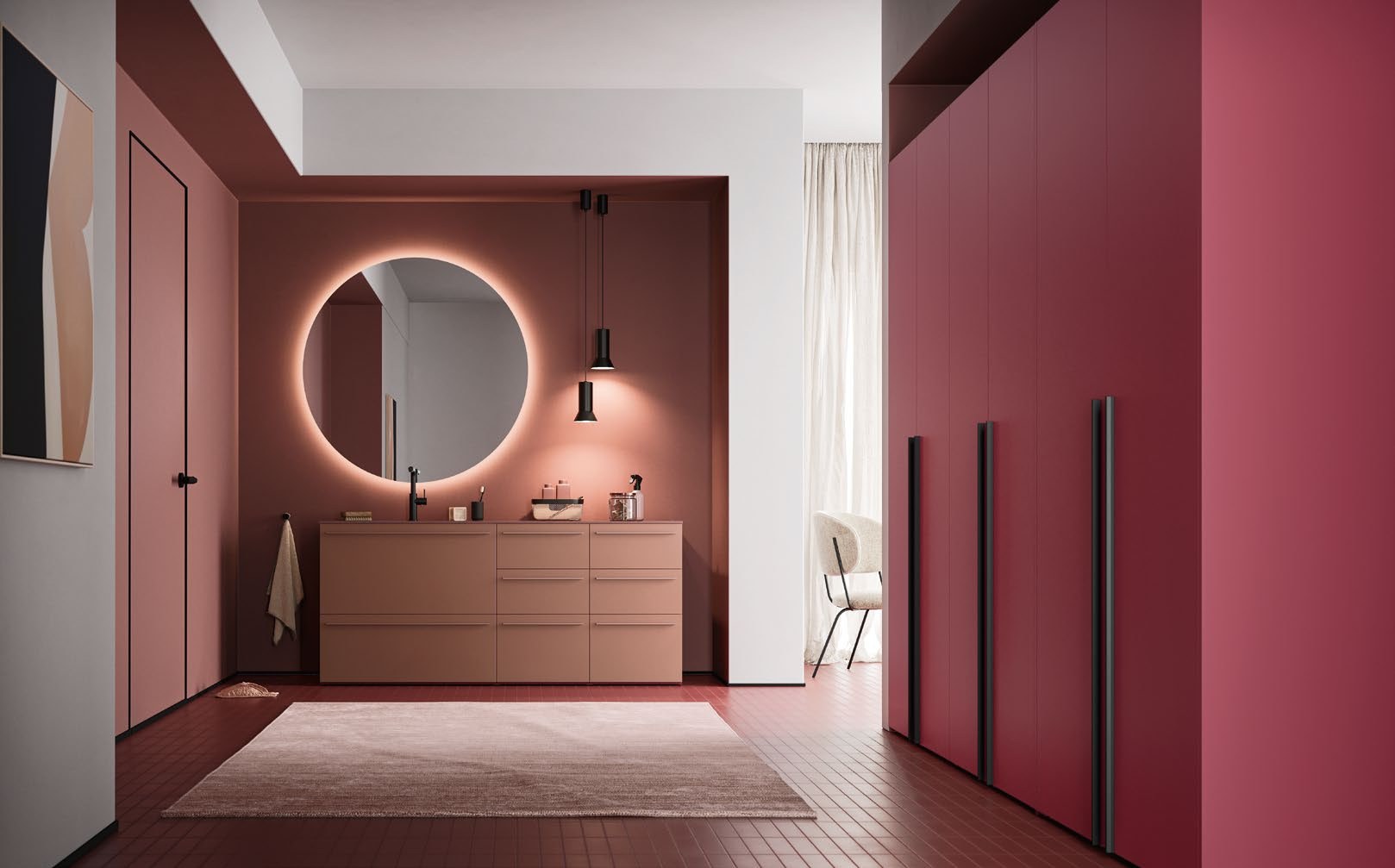
The details that show over the years
Two bathrooms can look identical on the first day and completely different in the fifth year. The difference is almost always in the mechanisms and the details.
- Soft-close hinges on all doors, not as an upgrade, but as the standard.
- Drawers with metal sides and Blumotion soft-close technology.
- A handle that does not protrude: on Code the handle is a groove cut at 45° into the door itself, with no extra component.
- Mirrors with high resistance to corrosion and ageing. They are cleaned only with a damp cloth, never with chemicals.
- A QR code inside every washbasin unit, leading to the photos of the order, the assembly instructions and the package list. Useful in ten years' time, when nobody remembers exactly what was chosen.
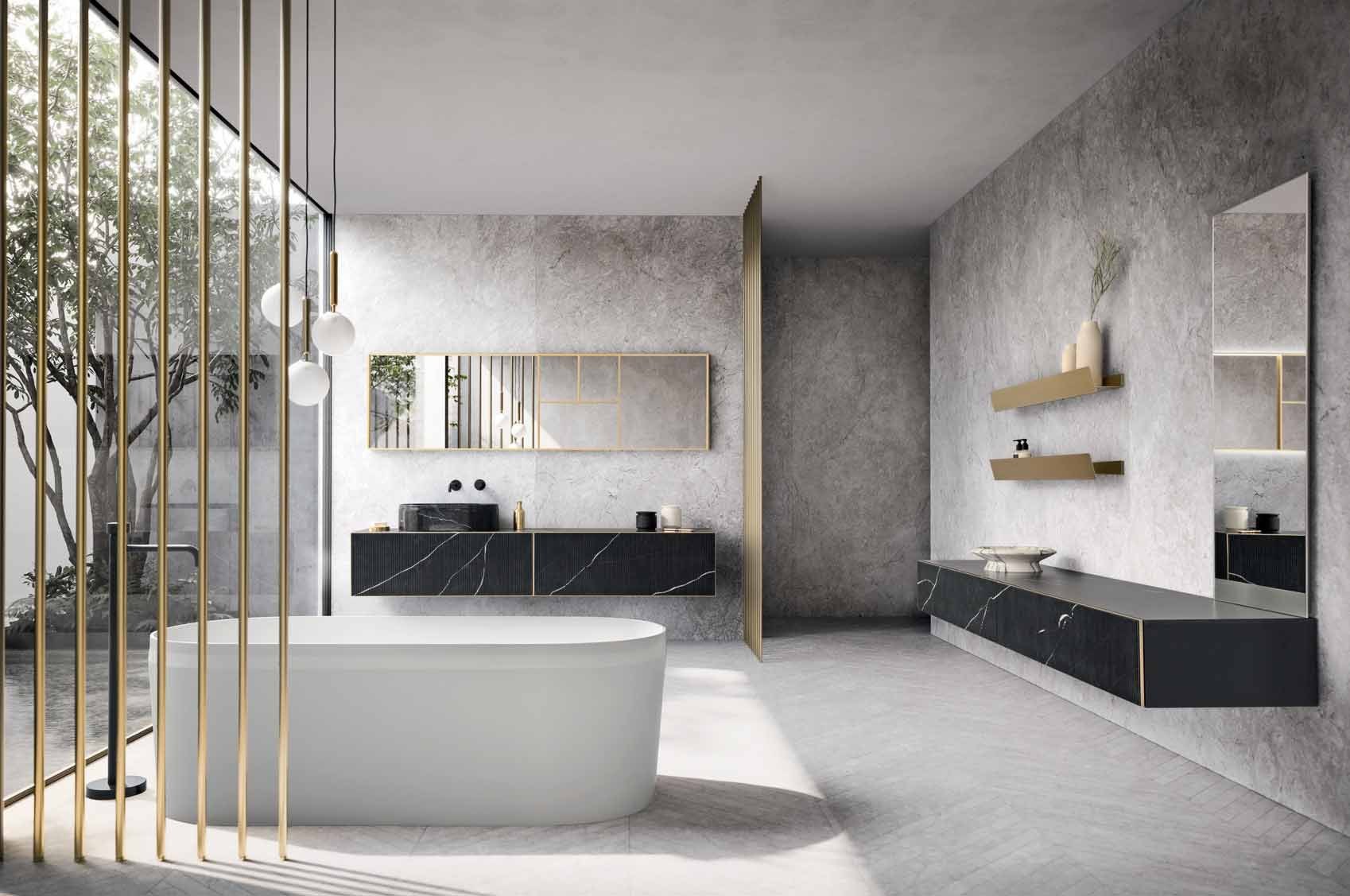
The same shade throughout the home
Your kitchen is only the beginning. When the kitchen, the doors and the bathroom are designed together, the shade is worked out once and matches everywhere. Arbi offers 56 lacquer shades, and its interior doors Barausse are available in 17 lacquer shades. How the lacquers tie together from room to room is shown in our guide to lacquer kitchens.
In our project in Berlin we designed the entire home: a Pedini kitchen, Febal Casa wardrobes and Arbi bathrooms with wall-hung units in a white textured wavy finish, with inset and countertop washbasins.
Frequently asked questions
Wall-hung or floor-standing bathroom furniture?
Wall-hung units leave the floor free, make cleaning easier and make the space read as larger. Floor-standing units have a more solid presence and often more usable space in the same width. Both are options within the same programme, so you do not need to change model to compare them.
What stands up best to bathroom humidity?
It is decided in the construction, not the finish: a carcase of E1-class particleboard or fibreboard, an MDF front with polyester paint, glass shelves and carefully finished edges. The edges are where almost every case of moisture damage begins.
Can I have the furniture in my own colour?
Yes. Beyond the 56 lacquer finishes of the standard colour chart, it can be painted to order in any RAL shade. It applies to the whole composition and carries a surcharge, which is why the decision is made in the design study.
Is the washbasin chosen separately from the worktop?
Usually not. In Italian systems the worktop and the basin are very often a single cast piece, with no joint around the basin, which is also the spot that is hardest to clean.
Does a modular system fit in a small bathroom?
Usually yes, and that is exactly where it pays off most. On Sky, for example, the wall-hung units start at 25 cm wide and 37 cm deep. We measure with you and design on the real dimensions.
How much does an Italian bathroom unit cost?
It depends on the size of the composition, the worktop material and the finish, the same three things that determine the cost of a kitchen. With the design study and the 3D design you see the composition and its cost before you decide.
Would you like to see the samples up close? Book an appointment at our showroom, 267 Mesogeion Avenue, Neo Psychiko.
Shall we design it together?
Come to our showroom in Neo Psychiko — we design and cost your kitchen together. The 3D design for the presentation is free.
Book an appointment267 Mesogeion Avenue, Neo Psychiko, Athens · +30 210 674 8332